Showing posts with label SRI LANKA HISTORY. Show all posts

Wednesday, 28 September 2016

O L M Macan Markar


Oduma Lebbe Marikar of Galle had three sons - Naina Marikar, Macan Markar and Haji Ahmad. Naina Marikar had many sons, the eldest of whom was Muhammad Ismail. He established a Gem & Jewelry business in his name, N.M. Ismail. On his death, his three sons - Mahmood Ali, Muhammad Jameel and Muhammad Kassim (better known for his services as Honorary Secretary to the Ceylon Cricket Association for nearly a decade), changed the name of the business to M. Ali & Bros. and carried on a lucrative trade in the Victoria Arcade. They also assumed the ownership and management of Watawala Tea Estate, near Hatton, in the Central Province. Haji Ahmed had an only son, Cabeer who passed away at a relatively young age while performing the Friday Congregational Jumuah Prayers at the Galle Fort Mosque.
Oduma Lebbe Marikar Macan Markar, the second son, established, in 1860, a jewelry business at Point de Galle. The business flourished and was moved to Colombo when the port of call for ships was moved from Galle harbor to Colombo harbor. His establishment in Colombo commenced at No. 1, Grand Oriental Hotel Arcade, Fort, Colombo. With the increase of patronage he moved to a more prominent location of the Grand Oriental Hotel in 1905. He had, among his clients, several members of the British Royalty comprising, His Majesty King Edward VII (1875) as Prince of Wales and His Majesty King George V (1901) as the Duke of Cornwall and York. Amongst the British nobility, some of his customers were, the Duke of Manchester, the Duke of Sutherland, Earl of Aylesford, Earl of Ellesmore, and Lord Abercomby.
In 1901, His Majesty King George V, as the Duke of Cornwall and York and the Duke of Roxbury, visited the exhibition of gems specially displayed at the King’s Pavillion in Kandy and made purchases from Macan Markar and complimented the firm for their excellent collection of gems. The firm regularly exported precious stones to the London and Paris markets. The world famous Cat’s Eye, weighing 105 Carats, called the Blue Giant of the Orient, a Blue Sapphire weighing 225 carats and the Wonder Star of Asia, a Star Sapphire weighing 225 carats are in the possession of the firm. They also possess a rare collection of antique jewelry worn by Moor brides of the past.
O.L.M.Macan Markar passed away on July 4, 1901.
The members of the firm who succeeded the founder were his four sons - Muhammad Macan Markar, Samsudeen Macan Markar, the most resourceful of them all in business, Abdul Vadood Macan Markar, steady and cautious in all his undertakings, and Muhammad Saleh Macan Markar, who passed away early in life in the year 1928 leaving behind a bequest of Rs. 50,000 for the establishment of the Saleh Macan Markar Muslim Educational Trust for the welfare of Muslim students.
The firm had, prior to 1942, branch offices at Shepherd’s Hotel, Continental Savoy, and Semiramis at Cairo and King David Hotel in Jerusalem.
Muhammad Macan Markar, fifth in a family of thirteen, was born at No. 47, Church Street, Fort, Galle on September 7, 1877. He was educated at Wesley College, Colombo (Pettah) and represented the College Cricket XI under the name of M.M.Muhammad, as he was then known at school. His contemporaries were, C.E.Pereira, who was the captain of the Cricket XI at Wesley, and S.P.Foenander, the worlds official cricket record keeper.
Muhammad made an unsuccessful attempt at passing the pre-medical examination before turning to business.
He was the Vice Consul for Turkey at Galle and later Consul for Turkey at Colombo during the period 1903 to 1915. He was also a member of the Galle Municipal Council, for twenty five years, during the period 1906 to 1931. later he was a member of the Colombo Municipal Council from 1940 to 1943. he also sat as a member of the Fez Committee and was the founder President of the All Ceylon Moor’s Association for and held that position for a number of years. He, subsequently, held the position of President of the All Ceylon Muslim League in 1945. He represented the Consulta eof Turkey in Ceylon. First Muslim Member for the All Island Seat at the Legislative Council. Senator 1947-1952. In addition, Muhammad was a registered member of the congregation of the Maradana Mosque. He was Knighted in 1938.
Ibrahimiya Arabic College at Galle was founded by his mother, Mrs. O.L.M.Macan Markar, who left endowments for its maintenance. The institution is now being maintained by the firm.
Haji Muhammad Macan Markar, Effendi, as he was known then, married Noor Neima Naina-Marikar, the eldest daughter of S.L.Naina Marikar Hajiar, on July 2, 1910, at "Muirburn", Turret Road, Colombo.
When the Hijaz Railway connecting Makkah and Madinah was commenced in 1907, Ceylon Muslims presented, at the Grand Mosque, New Moor Street, an address of thanks to the Turkish Consul, Muhammad Macan Markar, for submission to the Sultan of Turkey. A photograph of those who attended this function is still available.
Muhammad Macan Markar performed the Hajj piligrimage, in 1906, together with his mother, Aamina Umma, daughter of Aboobucker Mudaliyar, his grandmother Pathumuthu, daughter of Mudaliyar Cassim Lebbe Marikar (Cassile Blanc), his maternal uncle, Avoo Lebbe Marikar and the two ikhwans. S.L.M.H.Abdul Wahab and H.S.M. Izzadeen. They encountered a number of interesting adventures on their journey, including an encounter with a Bedouin tribe while crossing the Arabian desert on camel back, in a caravan.
As Turkish Consul, he visited Istanbul together with his brother Abdul Vadood and thereafter Rome, Paris and London on business, in 1909. While in London, he was presented to His Majesty King Edward VII, at St. James’s Palace by Lord Crewe.
Muhammad Macan Markar took a keen interest in the promotion of Muslim education and subscribed Rs. 1,000 towards the construction of houses, alongside the New Olympia Theatre at Darley Road, in a project that was estimated to cost Rs. 12,750. He, along with M.T.Akbar and several others, founded the Ceylon Muslim Educational Society Ltd., which established and managed the Hussainiya Boy’s School and Fathima Girl’s School. He realised the disability he suffered from insufficient education and endeavoured to provide his sons the best possible education available.
It was in his lavish bungalow, "Villa Stamboul", Galle Road, Colpetty, that the Muslim Ladies of Ceylon, gave an "Arabian Night" reception and presented an address paper to Lady Manning, wife of Governor, Sir Henry Manning, on October 5, 1921. The members of the reception committee were:-
Mrs. S.L.Naina Marikar, Mrs. E.G.Adamaly, Mrs. C.M.Meera Lebbe Marikar, Mrs. M.A.C.Muhammad, Mrs. W.M.Abdul Rahman, Mrs. S.L.Mahmood, Mrs. A.A.M.Saleem, Mrs. M.R.Akbar, Mrs. Ghouse Mohideen, Mrs. H.N.H.Jalaludeen and Mrs. H.M.Macan Markar.
Muhammad Macan Markar was elected the first Mohammedan Member for the all island seat in the Legislative Council in 1924. He was subsequently elected member for the Batticaloa South electorate in the State Council from 1931 to 1936 defeating E.R. Thambimuthu, and thereby gave the Muslims of the Eastern Province a political consciousness. he was elected the Minister of Communication and Works and it was his deciding vote in the Board of Ministers that introduced Income Tax to Ceylon. He was Knighted in 1938. At a grand public reception given to him in his home town, Galle, he was the first Muslim to openly espouse the establishment of a Sinhala Government, provided that justice and fairplay amongst all te communities in the country was ensured. As a matter of fact, the pro-Sinhala attitude of the All Ceylon Moor’s Association, of which Sir Muhammad was the President, broke the back-bone of the pro-fifty-fifty group. Sir Muhammad’s successor in office, Sir Razik Fareed, carried on this policy with great gusto until the fifty-fifty cry was silenced.
Sir Muhammad was appointed a Senator in the first Parliament of Ceylon in 1947 and continued to remain so until his death, after a short illness, on May 10, 1952 (15 Sha’aban 1371H). His wife pre-deceased him. He confided that he had two sincere loyal friends who were true to him right up to the end. They were, Hon. W.M.Abdul Rahman and H.N.H. Jalaludeen Hajiar.
Sir Muhammad made a bequest of Rs. 50,000 towards the construction of a Mosque in the University of Ceylon campus at Peradeniya. He also made substantial endowments towards Muslim female aducation and for post graduate studies for Muslim students.
His sons are, Ahmed Hussain Macan Markar, BA (Cantab), Bar-at-Law, MMC (former MP for Batticaloa); Alavi Ibrahim Macan Markar, MA (Cantab), FCA, Chartered Accountant and Dr. Muhammad Ajward Macan Markar, MD (London), MRCP (england), Professor of Medicine, University of Ceylon, Peradeniya.
His daughters are, Noorul Kareema (wife of Ahamed Samsudeen Muhammad), Hibshir Hanem (wife of A.M.Aboobucker), Fathima Shoiba (wife of S.A.C.Ismail), Noorul Ameena (wife of Muhammad Alavi Macan Markar).
The street that meets Galle Road at a perpendicular from Slave Island at the Macan Markar Building/Galle Face Hotel junction was renamed to Sir Macan Markar Mawatha on account of the contribution of the Macan Markar family towards industry, business, trading and politics in Sri Lanka.

இலங்கையின் சுதந்திரத்திற்காக மர்ஹூம் சேர் ராஸிக் பரீத் ஆற்றிய உரையில்

அகில இலங்கை சோனகர் சங்க்தின்| தலைவரும் அரச சபையில் முஸ்லிம்களின் பிரதிநிதியாக இருந்தவருமான சேர் ராஸிக் பரீத் பின் வருமாறு உரையாற்றினார்.
1936ம் ஆண்டை ஞாபகமூட்ட விரும்பு கிறேன். இந்த அரச பைக்கு அன்று நடந்த பொதுத் தேர்தலில் சோனகர்கள ஒரு பிரதிநிதியையாவது அனுப்ப முடியவில்லை. தமிழ் சமூகம் 40000 சோனகர், வாக்களர் கள் இருக்கும் தொகுதிகளான மன்னார், மட்டக்களப்புத் தெற்கு, திருகோணமலை ஆகிய இடங்களிலிருந்து தமிழ்ப் பிரதிநிதி களைத்தான் அனுப்பினார்கள். இருந்தும், நாம் தமிழ் அங்கத்தினர்களை ஒன்றாகவே கருதி வந்தோம்.
இந்த நாட்டில் வாழும் ஐந்து லட்சம் சோனர்களை ஐம்பது கிளைகளைக் கொண்ட அகில இலங்கை சோனகர் சங்கம் கௌரவ தலைவருடைய இந்தத் தீர்மானத்திற்கு எமது ஆதரவையும் ஒத்துழைப்பையும் அளிக்கிறது. எனக்கு இதைவிட இன்பம் தரக் கூடியது வேறொ ன்றுமில்லை. எனது மனப்பூர்வமான ஆதரவை கௌரவ சபைத் தலைவரின் பிரேர ணைக்கு அளிக்க விரும்பகிறேன். என்னு டைய சமூகமும் நானும் அவருக்க உறு துணையாகவே இருந்து வந்திருக்கிறோம். வெற்றி பெறும் இத்தருணத்தில் அவரோடு கை கோர்த்துக் கொண்டு டொமினியன் அந்தஸ்தை நோக்கி நாம் முன்னேறத் தயார் என்பதைக் கூற விருப்புகிறேன்||.
ஷஷசிங்கள சகோதர சகோதரிகளைப் போல் இலங்கை சோனகர்கள் இலங்கைத் தாய் நாட்டின் தவப் புதல்வர்கள் ஆவர். இத்தவத்திரு நாட்டில் கடந்த பல நூற்றாண்டுகளாக சிங்கள மக்களும் சோனகர்களும் ஒற்றுமையுட னும், பரஸ்பர அன்புடனும் வாழ்ந்து வந்திருக்கிறார்கள். கடந்த காலத்தில் பல தவறுகள் ஏற்பட்டிருக்கலாம். நான் அதைப் பற்றி இப்பொழுது பேச விரும்பவில்லை. இன்றைய அறிவு யுகத்தில் எந்தப் பிரச்சி னையும் மனித சக்திக்கு அப்பாற்பட்டதல்ல. எப்பிரச்சினையும், நல்லெண்ணத்துடனும், ஒற்றுமையுடனும் நாம் அணுகினால், அதைத் தீர்க்க முடியும்.
எனவே எம்முடைய சினேக கரங் களை எமது சிங்கள சகோதரர்களுக்கு நீட்டுகிறோம்…. தமிழ்த் தலைவர்கள் 50க்கு 50 என்ற தூண்டில் மூலம் முஸ்லிம்களைப் பிடிக்க முயன்றார்கள். சிங்கள மக்களில் வைத்த நம்பிக்கையை சோனகர் இழக்க வில்லை. வெற்றி வாகை சூடும் இத்தரு ணத்தில் சிங்கள மக்களுக்க நான் இதை ஞாபக மூட்ட விரும்புகிறேன்.
தம்முடைய கோரிக்கைகளுக்கு முஸ்லிம்களின் உதவியை நாடிய தமிழ்த் தலைவர்கள் முஸ்லிம்களின் உரிமைகளை உதாசீனம் செய்தது. தமிழ் காங்கிரஸ் தலைவர் ஜி.ஜி. பொன்னம்பலம் தன்னுடைய திட்டத்தில் ஷஷஇலங்கைத் தமிழர்களுக்கு 17 ஆசனங்களும், இந்தியத் தமிழர்களுக்கு 13 ஆசனங்களும் பறங்கியர்களுக்கும் ஐரோப்பியர்களுக்கும் 8 ஆசனங்களும் (நியமனம்) எஞ்சியிருந்த 12 ஆசனங்களை ஏனைய எல்லா சிறுபான்மை இனமக் களுக்கும் பகிர்ந்து கொடுக்கப்படும்|| என்றார்.
(இப்பிரேரணை சம்பந்தமான கூட்டத் தில், இவ்வேற்பாட்டையறிந்த டாக்டர் கலீல் முஸ்லிம்களுக்கு ஆசனங்கள் கொடுக்கப் படல் வேண்டும் என்ற தமது கோரிக்கை யை எடுத்துரைத்ததோடு, ஷஷஎங்களை நீங் கள் என்னவென்று எண்ணினீர்கள். ஏனை யோருக்கு வழங்கும் எஞ்சியுள்ள ஆசனங் களைத்தான் நீங்கள் எங்களுக்குக் கொடு க்க வேண்டுமா?|| என்று கூறிக் கொண்டு கூட்டத்திலிருந்தும் வெளியேறினார். தமிழர்களின் இந்தப் போக்கினால் விரக் தியடைந்த முஸ்லிம்கள், சிங்களத் தலைவர் களை ஆதரிக்க முன் வந்தார்கள்.)
இதே கருத்தைத்தான் சேர் ராஸிக் பரீத் அரச சபையில் கூறும் போது
ஷஷகாங்கேசன்துறை அங்கத்தவரும், மன்னார் அங்கத்தவரும் ஆற்றிய இரங்கத் தக்க சொற்பொழிவுகளுக்குப் பிறகு, சோனகர்களாகிய நாம், சிங்களவரைத் தவிர்ந்த ஏனைய சமூகங்களினால், எவ் வளவு பாதிக்கப்பட்டிருக்கிறோம் என்ப தைக் கூற கடமைப்பட்டுள்ளேன். தமிழ் சமூகத்திற்குத் ஆறுதல் கூறும் வகையில் தான் நான் இச்சொற்பொழிவை ஆற்றுகி றேன். எங்களுடைய பிரதிநிதித்துவம், இல்லாமலேயே எங்களைப் பற்றிய குறிப்பு கள் கூறப்பட்டிருக்கின்றன. சோனகர்கள் தமிழ் பேசும் மக்களாகையால், தமிழர்கள் எம்மைப் பிரதிநிதித்துவப் படுத்தலாம், என்று ஒரு கால கட்டத்தில் கூறப்பட்டது. இப்படிப்பட்ட ஒரு நிலைக்கும், நாம் தலை வணங்க வேண்டியிருந்தது||
மேலும் கூறுகையில்
என்று சேர் ராஸிக் பரீத் கூறினார். மேலும் அவர் பின்வருமாறு கூறினார்.
ஷஷநாங்கள் பல துயரங்களை அனுப வித்திருக்கிறோம். சோனர்களாகிய நாம் பட்ட கஷ்டங்களில் பத்தில் ஒரு பங்காவது நீங்கள் அனுபவிக்கவில்லை. சிறுபான்மை யின அரசாங்கத்தின் நிபந்தனை, புதிய அரசியலமைப்பில் சிறுபான்மையின மக்களுக்குப் பாதுகாப்பு இருக்க வேண்டு மென்பதேயாகும்.
டொமினியன் அந்தஸ்தை வேண்டி நிற்கும் சிங்கள மக்களின் நியாயபூர்வமான கோரிக்கைக்கு நாம் பக்கபலமாக இருக்கி றோம். எனவே, சிங்களவர் தமிழர் சோன கர் ஆகிய நாம் எல்லோரும், டொமினியன் அந்தஸ்தை நோக்கி முன்னேறி பிரித்தானிய காமன் வெல்த் நாடுகளின் சங்கத்தில் ஓர் அங்கத்தவராக, எமது தாய் திருநாடாம் இலங்கையை பெருமையுடன் வீற்றிருக்கச் செய்வோமாக|| என்று சேர் ராஸிக் பரீத் பேசி முடித்தார்.
நன்றி: முஹம்மத் சமீம் எழுதிய இலங்கை சிறுபான்மை சமூகத்தின் பிரச்சனைகள் நூல்.)

The Ceylon Moors have been in Ceylon as long as we Sinhalese have been here


he late S.W.R.D. Bandaranaike said, "The Ceylon Moors have been in Ceylon as long as we Sinhalese have been here. A close bond of friendship exists between the two communities."

Towards Sinhala, Muslims EkemuthukamaSri Lanka - 50 years of Independence
By A.H.G. Ameen
While we celebrate the Golden Jubilee of our independence on 4th February it is pertinent to give thought to the contributions Muslims of Sri Lanka made towards the attainment of freedom.
Muslims came to Sri Lanka as traders and not conquerors. The advent of Arabs in this country dates back to the first century A.D. according to Pliny (23-79 AD) the historian. In the early 7th century there had been a considerable number of Muslims living in Ceylon. When the Holy Prophet Mohamed (Sal) was living in the year 632 A.D., according to Hon Shashriyar in his book "Ajaib Al-Hind" or "Marvels of India" the people of Ceylon and surrounding areas set out in a delegation to visit Arabia to meet the Holy Prophet.
The late S.W.R.D. Bandaranaike said, "The Ceylon Moors have been in Ceylon as long as we Sinhalese have been here. A close bond of friendship exists between the two communities."
Sir RazikIn the struggle for independence, Muslim leaders played a prominent and distinguished role. During the early period of British rule they agitated for special representation to the Legislative Council and made demands for safeguards but when the struggle for independence began, they rallied round the leaders of other communities to obtain independence. 
Some of the Muslim political leaders who made valuable contributions that led to the attainment of independence were W.M. Abdur Rahman, Sir Mohamed Macan Marker, N.D.H. Abdul Cader, Mohamed Ishak, M.L.M. Reyal, Dr. M.C.M. Kaleel, Dr. T.B. Jayah and Sir Razik Fareed.

The Golden Plain - Life and times of Alhaj H. S. Ismail

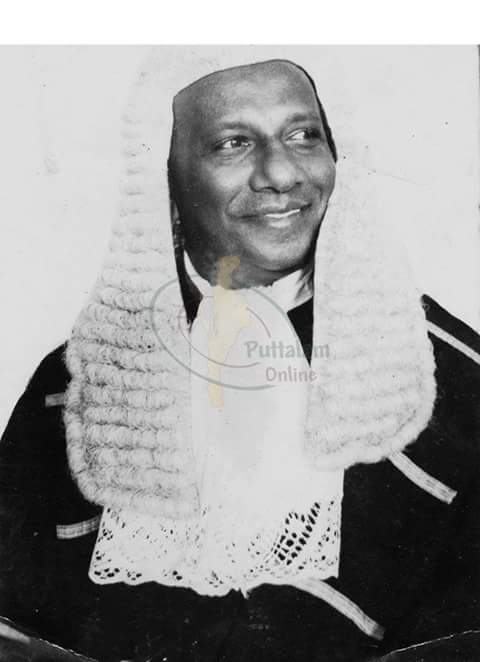
Dheen Arachchiar’s Grandson-in-Law Proctor H. S. Ismail (1901-1974) - first Muslim Speaker and first elected Member of Parliament in the first general election held for the Parliament of Independent Ceylon in 1947. 
http://www.island.lk/2003/05/25/featur10.html

1947 - The dates of the first election for the first Independent Parliament of Ceylon has been announced. At the Puttalam Kachcheri the Assistant Government Agent Walwin A. de Silva (In those theys the GAs were for the provinces; the district has AGAs) accepted nomination from the sole contestant Mr. H. S. Ismail. After the nominations were closed, he waited for one more hour for objections and finding none, he declared H. S. Ismail as the winner uncontested and escorted him outside.
His supporters adorned him with garlands. There were also people who waited outside with garlands for any other contestant. Having found no other, they put them on the AGA, whereupon for everyone’s amusement Mr. Ismail said that Mr. Walwin A. de silva is the other contestant.
H. S. Ismail is a distinguished product of Puttalam. According to eminent Greek, Roman and Arab historians, Puttalam, Manthota and Galle had Arab settlements several centuries before the birth of Christ. Ibn Batuta, the famous Arab traveller from Morocco, when he came to Sri Lanka in 1342 AD, he visited Puttalam. Therefore, Mr. Ismail’s association with his ancient Arab settlement brings about a faint stir of historical memories.
Narrating the story of the Sinhalese, the Mahawansa records that Prince Wijaya landed in this region - North of Puttalam encircling the present Eluvankulam, Wanathavilluwa and Karaitivu areas and called it ‘Thambapanni’ (The Golden Plain) because of the golden colour of its sands.
The sands still retain its original colour. Many persons ever since have come and gone leaving their footprints on the sands of time. Alhaj H. S. Ismail was one such eminent personality. He belonged to a rare breed of great men, who are seldom seen in the public of this country. He led an exemplary life, displaying the highest standards of honesty, integrity and truthfulness. I might, mention an incident, which eloquently illustrates the impeccable character of Mr. Ismail. When coconuts were being plucked in his estate, he would patiently wait till the last coconut that was plucked. If 2501 coconuts were plucked, he will record 2501. His honesty was such that he did not want even a single coconut was plucked. In his estates not to be included in his income tax estimates. This was to enable the government to get its legitimate revenue.
Piety, humanity and simplicity were the other noteworthy features of late H. S. Ismail. He held one of the highest positions in Sri Lanka as the Speaker of Parliament. There was no fanfare or ostentation about him despite his eminent position in the public life of this country. He led an exemplary Muslim life and his multi-faceted activities are an eloquent tribute to his desire to serve his fellow men.
Born in May 1901 in Puttalam to a well-respected family, young Ismail began his Qur’anic lessons in 1905. He had his primary education in St. Andrew’s College, Puttalam and secondary education at Wesley College, Colombo. He then entered Law College, Colombo, passed his Proctor’s Finals in 1925, carrying away the prizes for Law of Persons and Property, the Law of Contracts and Torts and for Conveyancing. He practised in Colombo only for a short period of time and decided to move to his hometown Puttalam.
He maintained the highest standard of legal ethics. When he wrote a land deed, its veracity was such that the Kachcheri, the Court of Law and everyone would accept it without question.
His briefs were few and far between. This was because he will not accept a case, unless he feels that it is morally correct to defend the client. If the client admitted his quit to him he would take up the case and plead in mitigation for the offence committed before the judge.
The sight of Muslim women with infants in their arms prompted him to launch the Ceylon Baithulmal Fund (CBF). Ever since its inception, the CBF has contributed immensely for the welfare of poor Muslims. Many rich Muslims were able to make worthy use of their Zakat money by making contribution to the Baithulmal. He also addressed Muslim women on social service work and social reforms on various occasions.
He dealt with the social evils prevailing among the Muslims. He warned them that if they did not try to improve and remedy our social and economic life, we would find ourselves to be the depressed class of this island. Everybody talks of evil but never work for the welfare of the Muslim society. Mr. Ismail recalled the words of the late Justice M. T. Akbar who said, ‘follow the religion and the rest will follow.’ He took strong exception to liquor being served at public functions. He said he will not attend any occasion where liquor was being served. True to his stand, he refused publicly to attend Muslim embassy functions that served liquor.
Mr. Ismail was the prime mover of the Puttalam hospital extension project. He wanted something done for ante and post-natal care and a maternity home for deliveries.
He was instrumental in making representations to the Radio Commission for a separate Muslim section. Ever since its inception, the Muslim section of the Radio Ceylon (now SLBC) has provided yeoman service to the Muslims of this country.Mr. Ismail also pioneered the construction of a mosque at the Peradeniya University campus. When a school for the teaching of Arabic and Quranic reading was declared open by Mr. Ismail, a local Moulavi in his speech said that the Holy Prophet’s saying about ‘acquire knowledge’ meant the acquiring of religious knowledge. Mr. Ismail hastened to add that it has a much wider meaning and that in this context it encompasses all forms of knowledge that is required for the benefit of mankind both in this world and in the hereafter - Fiddunya wal a’khira!
Mr. Ismail maintained a diary of his public life, which is meticulously recorded by his biographer Dr. M. S. M. Anes, Senior Lecturer, Department of Philosophy, University of Peradeniya. It gives an insight into the contemporary life of his times. In it, he has mentioned about his association with the Tamil language despite not studying it beyond the 4th standard. After Sir Vaithyalingam Doraisamy in the State Council, Mr. Ismail was the first Tamil Speaking Speaker in the Independent Parliament. He was a source of inspiration and guide to all the Tamil speaking members. "If and when occasion arises I had always spoken in Tamil at public meetings. None is more conscious than I of my own limitations. I have to praise Allah for this state of affairs. He seems to be very kind and merciful to me," Mr. Ismail wrote.
Being a man of serene personality did not deter him from carrying out his duties to the letter, even during crisis situations. For instance, during the presentation of the ‘Public Ordinance Bill,’ he ordered the Sergeant-at-Arms to remove no fewer than 12 disputing MPs from the Chambers, among whom were political giants of that era such as Dr. N. M. Perera, Dr. Colvin R. De Silva, Robert Gunawardene, Leslie Gunewardene etc.
Alhaj H. S. Ismail was a staunch follower of the Thabligh movement, the prime object of which is to enlist voluntary workers to enjoin Muslims to lead an Islamic life and to attend the daily prayers. His life was inspired by the highest religious ideals of Islam. As a Muslim he believed in the fundamental equality, dignity and fraternity of mankind. He was a man of PEACE, who was opposed to all forms violence. In the pursuit of peace, we can draw tremendous inspiration from a person who was serene and tranquil. He made no distinction whatsoever on the basis of religion, race or class.
He had the unique distinction of becoming the first elected Member of Parliament in the first general election held for the Parliament of Independent Ceylon in 1947. He was elected uncontested on nominations day. The people of Puttalam wanted Mr. H. S. Ismail to represent them and therefore no one else came forward to contest against him. Such was the respect and admiration they had for this illustrious son of Puttalam. Later on he also became the first Muslim Speaker in 1956 in the Bandaranaike Government.
Although he departed from us some thirty years ago in 1973, his memories have never faded away from us. On the contrary they always stay with us and act as a shining beacon to illumine the lives of all of us for generations.
The grateful people of Puttalam will be remembering him on his 102nd birth anniversary. As a tribute to his memory, the Philatelic Bureau issued a stamp in his memory on 18 May under the patronage of the Minister of Mass Communications, Imthiaz Bakeer Markar. I am privileged to compile and edit a book containing his speeches made in Parliament, which is entitled ‘The Golden Plain’. This is the third in a series of publications containing the speeches of eminent personalities made in Parliament.
The H. S. Ismail Commemoration committee will also be launching a scholarship fund to assist poor students to pursue higher studies, worthy tribute to a man who strived hard to uplift the standard of his community.
Alhaj A. H. M. Azwer, M. P.
Minister of Parliamentary Affairs
President, H. S. Ismail Commemoration Committee

The Origins, Anthropology, Ethnology and Afinities of South Asian Muslims

Posted on February 21, 2014 by Mohammed Jehan Khan
By : Mohammed Jehan Khan

Subcontinent Muslims trace two ancestries. Muslims in the southern block of the indian subcontinent (specially Muslims in Kerala, Keelakarai and Muslims living in the Southern and western block of Sri Lanka) trace thier ancestry back to Arab Traders and share similar physical and linguistic background, while Northern Muslims and their ancestral records are quite messy.

Let us start from the southern block. in an article published on my blogsite (March 9th 2013), I breifly explained the history of Mappilla Muslims (Malayali and Keelakarai Muslims) and Sri Lankan Moors. During the 9th Century, what is called the “Medieval era” the Arab Islamic dynasties have reached their peaks.They expanded their voyages eastwards, towards India and China, in search of trade. In the 9th and 10th centuries, an assortment of Persians, Arabs, Abyssinians, all Muslims, speaking Arabic and therefore conveniently called ‘Arabs’ dominated the overseas trade from Baghdad/Basra/Hadramout to China. The Muslims of Sri Lanka and Kerala (a South Indian state) were a part of this trade operation.

According to Historians Elliot and Dowson in their book The History of India as told by its own Historians, the first ship bearing Muslim travellers was seen on the Indian subcontinent coast as early as 630 AD. There is evidence that there were Muslim merchant settlements in Sri Lanka as early as the 7th century. M. A. M. Shukri has used the Arabic (Kufi) inscriptions in Sri Lanka to throw light on the origins of Sri Lanka’s Muslims. He says that the Sri Lanka Moors originally came from Aleppo, a city in Syria. (‘Sri Lanka and the Silk Road of the Sea’ p181)

Marakkalayar/Sonahar (Tamil) or Marikkala/ Yonaka or Yon (Sinhala) is a name given to the Moors of Sri Lanka and in Kerala they are known as the Maappilas or Marakkar which can be translated as (Marakkalam is a wooden boat) `boatmen’. the word Marakkar is usually derived from the Arabic `Markab’, a boat. The story goes that, when the first Arabic Yemenis landed on the shores of Sri Lanka, they were naturally asked by the natives, who they were, and where they came from. In answer they pointed to their boats, and pronounced the word Markab, and they became in consequence “Marakkalaya”, or the people of Markab.

By the time the Umayyad Caliphate formalised diplomatic relations with the court at Sinhalese Kingdom in around 12th to 15th century AD and a large number of Yemeni, Omani, Syrian and Persian merchants established a community in the Western and Soutern Coastal cities of Sri Lanka and in Kerala and Some coastal districts in Tamil Nadu. But the relationship was of much longer standing and had developed from two sources. The first was the export from Sri Lanka of spices, notably cinnamon, and gems, the latter emphasised in an Arab name for the country Jairtu-ul Yaqut or the Island of Rubies. Ninth and tenth century Muslim writers mention also timber, kittul treacle (a palm extract) medicinal herbs and iron. The author of the Arab manuscript Akbar as-Sin wa-l-Hind (851 AD) describes an island off the coast of India called Langabalus [Lanka] where the local people offer from their boats “coconuts, sugarcane, bananas and palm wine: [a non alcoholic palm extract called ‘Kitul’ or ‘Peni’ in Sinhala] is a with beverage that is sweet like honey when one drinks it the moment it is tapped from the coconut palm, but if it is left for a little while it is transformed into wine, and, after a few days, into vinegar’.

There have been Islam in Sri Lanka and South India (Karnataka and Andra excluded) for well over a thousand years. Trading dhows plied the waters between the Middle East and the island known to Arab sailors – like the legendary Sinbad – as Serendib even in pre-Islamic times. The first Arab merchants and sailors may have landed on its shores during the Prophrt Muhammad (PBUH)’s life time. By the 10th century this predominantly Arab community had grown influential enough to control the trade of the south-western ports, whilst the Sinhalese and Malayali Zamorin kings generally employed Muslim ministers to direct the state’s commercial affairs.

However majority of the muslims in the Northern block of the subcontinent who call themselves Arab descendants, came from the untouchables and Sudra hindu caste. Every single Muslim in the Indo-Pak region believes s/he is of Arab descent. If not direct Arab descent, then the illustrious ancestor had come from either Iran or Bukhara. Arab origin is the favourite fiction of all these people. these people insists religious and ethnical coexistence and also detest racism but so unwilling to accept their ethnical background. they say everyman is same before god and yet ashamed to accept the reality of their ancestral background. so let us see how Islam spread through this region.

A ship filled with daughters of Arab and Moor traders who were trading in Sri Lanka was attacked by pirates from Darbal (what is now called Karachi, Pakistan) who captured and enslaved the Sri Lankan women. ISlam was fresh in Sri Lanka in 7th century BC and the Moorish Population of Sri Lanka had a great relationship with the Umayyad Caliphs. Seeking to liberate the women and punish the pirates, an expedition was sent out in 710, led by a 17 year old Yemeni Hashemite general Muhammad bin Qasim, an Arab from the city of Ta’if.

Muhammad bin Qasim led his army of 6,000 soldiers to the far eastern reaches of Persia, Makran. He encountered little resistance as he made his way into Indian Subcontinent. When he reached the city of Nerun, on the banks of the Indus River, he was welcomed into the city by the Buddhist monks that controlled it. Most cities along the Indus thus voluntarily came under Muslim control, with no fighting. In some cases, oppressed Buddhist minorities reached out to the Muslim armies for protection against high caste Brahmin governors. Despite the support and approval of much of the population, the Raja of Sindh, Raja Dahir, opposed the Muslim expansion and mobilised his army against Muhammad bin Qasim. In 712, the two armies met, with a decisive victory for the Muslims. With the victory, all of Sindh came under Muslim control.

The caste system, which originated from Hindu belief, divided society up into very strictly controlled social classes. Those on top led wealthy, comfortable lives, while those on the bottom (particularly untouchables) were seen as the scourge of society. these untouchables were believed to be the victims of Alexander the great’s military conquest and mass rape. the whiteness of their skin complexion is too a reason that they were poluted by the Eurasian invaders. Archeological and genetical evidence substantiates the fact that the Muslims in this region (especially Punjabis who constitute 47% of the Pakistani population and Kashmiris) are Sudras of Kushan branch of the Yuezhi. It has been found that the ancestral node of the phylogenetic tree of all the mtDNA types typically found in Greece and Europe are also to be found in Many North Indian Muslim population at relatively high frequencies. The majority of Indo-Pak-Bengali population share similar genes with other north Indian populations including those from Himachal Pradesh and Haryana, but also show a significant relationship with west Eurasian groups. CRUCIAL QUESTION THEN MUST BE POSTED, how on earth these Eurasian and Greek genes admixtured with Indian gene pool. History has an answer.

Alexander the great invaded India in 326 B.C. Alexander’s raid, which was so significant to Western historians, seemed to have entirely escaped the attention of Subcontinent’s Muslim and Sanskrit authors. From the Indian point of view, there was nothing to distinguish his raid in Indian history. Indian Subcontinent has two entry gates. One in the northern part of present day Kashmir, which is called ‘The Hindu Kush’ and the other is near Sapta Sindu region of present day Pakistanian Punjab. Alexander’s army entered into India through Hindu Kush, and left the subcontinent from Sapta Sindu region. He was neither a noble man nor did he have a heart of gold. His army raided the entire region, destroyed everywhere their feet touched, raped every woman they found. He also had meted out very cruel and harsh treatment to his earlier enemies. Basus of Bactria fought tooth and nail with Alexander to defend the freedom of his motherland. When he was brought before Alexander as a prisoner, Alexander ordered his servants to whip him and then cut off his nose and ears. He then killed him. Many Persian generals were killed by him.

Alexander’s raid of the Persian Achaemenid Empire, finally turned out to be a overthrow of the Achaemenid dynasty, usurpers of the Assyrian Empire. Unable to make headway into India, as Many Indian population had helped and influenced Indian princes to organise and support the Indian war against Alexander. Greek sources cite, after this realisation, at `The City of Brahmans’ (The present day Srinagar in Kashmir) Alexander massacred an estimated 8000-10,000 non-combatant civilians and his army raped around 100,000-800,000 women. these raped women had to carry their illegimitae children and they were isolated from the society and called untouchables who earned the curse of Lord Brahma. these population lived in sheer missery untill Islam came to liberate them.

In fact, the Muslims of Ind0-Pakistanian, Kashmiri and Bengal origin were probably from the this lower caste, as Islam offered them an escape from the oppressive social system they were accustomed to. Because pre-Islamic India was entirely based on a caste system in which society was broken into separate parts, conversion to Islam happened in a step-by-step process. Often, entire lower castes would convert to Islam at a time. This would happen for many different reasons. Often, however, the equality Islam provided was more attractive than the caste system’s organised racism. There was no opportunity for social mobility or to achieve greater than what your parents achieved. By converting to Islam, people had the opportunity to move up in society, and no longer were subservient to the Brahman caste.

Consequently, even after conversion, their ancestors were poor agriculturists, were looked down upon by the Persians, Mughals and Arabs and even those who had converted earlier the same way as they were by the Brahmans when they professed their Vedic belief.

In their need to escape from this shame, within a generation or two, those early converts began the great lie of Arab ancestry to be equal to others. They adopted few Arabic-Aryan surnames such as ‘Khan’, ‘Baloch’, ‘Hashemi’, ‘Sayyidi’, ‘Quraishi’, ‘Rushdi’, ‘Begum’, ‘Shah’, ‘Batool’, ‘Lone’, ‘Nabi’, ‘Mir’, ‘Bhutt’, ‘Dar’ etc and this great lie became universal with time.

The challenge then is for all those, Baloch, Pathan, Punjabi, Hashemi and other Indo-Pak Muslims, who have invented illegitimate fathers for theirselves to get theirselves tested and know the bitter truth.

(Mohammed Jehan Khan is a Sri Lankan Independent Socio-Political writer, a Columnist at The Lahore Times, can read his column athttp://www.lhrtimes.com/author/jehankhan/ and Follow him on Twitter @OfficialJehan)

that the elephant printed with a man wearing a cap near it, appearing on the 1,000/- rupees

How many of us know that the elephant printed with a man wearing a cap near it, appearing on the 1,000/- rupees ...notes, has an astonishing story behind it?
How many of us know that the elephant printed with a man wearing a cap near it, appearing on the 1,000/- rupees .
Every one of us familiar with the Rupees 1000/- notes for its size, color and so on will not know about the factual story of the elephant and the man with the cap near it, printed on the 1000/- rupees notes that are now in circulation in Sri Lanka.
Can anyone imagine that the elephant and the man wearing a cap near it are from the eastern province and the man is a Muslim? Yes, they are from the eastern province. The man is Umar Lebbai Panicker from Eravur
in the Batticaloa district and the tusker in the note was caught in 1925 in the Eravur forest and reared by him.
It is said Umar Lebbai Panicker presented this tusker to Dalada Maligawa and within a short period it escaped from there and went in search of him to Eravur. He brought it back again and handed over to the Dalada Maligawa.
President late J.R. Jayawardene in order to honor the long services of the tusker had declared it as a national asset in 1984. This tusker named as Raja adored the Esala Perehera processions in Kandy and thus became national fame and honored nationally.
After this, the government in power then, decided to honour the person presented this elephant to Dalada Maligawa by printing the picture of him with the tusker nearby, on the notes of rupees 1000/- and the village Eravur was thus honoured by this action.
The tusker Raja that served in Dalada Maligawa and brought fame and honour not only for itself but also to the person presented it to Dalada Maligawa and the village Eravur finally died on July 15, 1988 after serving 50 years in the Maligawa.
"Panicker "is a name given to people who catch elephants in the forest, rear them and sell to people involved in business, transporting or carrying very heavy materials and things. Their decedents are still identified as "Panicker Thaththi" or "Panicker Kathara"in Eravur. There is a road in Eravur known as 'Panicker Veedy'
named after their name.
- Asian Tribune -